Mastering Saponification: The Chemistry and Engineering of Modern Soapmaking
At its core, soapmaking is both an ancient craft and an intricate chemical process. The fundamental transformation that turns raw fats into cleansing agents is known as saponification. Understanding this chemical journey—and the sophisticated equipment that powers it—is essential for producing high-quality personal care and industrial soap products on a commercial scale.
The Fundamental Chemistry
Saponification is an exothermic chemical reaction between triglycerides (found in vegetable oils or animal fats) and a strong alkali, typically sodium hydroxide () for hard bar soaps or potassium hydroxide () for liquid formulations.
During this hydrolysis reaction, the ester bonds within the triglyceride molecules break down. The alkali neutralizes the fatty acids, yielding two distinct end products:
Fatty Acid Salts (Soap): The primary surfactant responsible for binding water and oil to lift away dirt and grease.
Glycerin (Glycerol): A valuable natural humectant that retains skin moisture, often extracted or left intact depending on the desired soap grade.
While traditional cold-process or hot-process soapmaking relies on manual batching in open vessels, industrial manufacturing requires exact thermal control, continuous agitation, and absolute chemical precision.
The Role of a Modern Saponification Machine
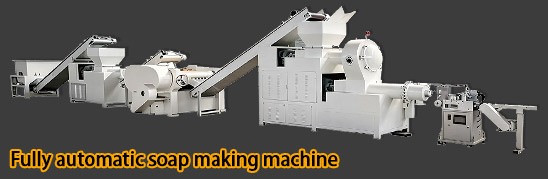
Achieving consistent batch quality, uniform texture, and optimal pH levels at scale demands specialized equipment. A modern saponification machine serves as the heart of any commercial soap production line.
Today’s industrial saponification machine units are designed to automate and streamline the entire saponification phase through integrated engineering features:
Precision Dosing Systems: Automated metering pumps feed raw oils, fatty acids, and caustic lye solutions into the reactor with exact stoichiometric balance, eliminating human error.
High-Shear Reaction Vessels: Equipped with high-speed agitators and homogenizers, the saponification machine rapidly emulsifies oil and alkali phases to accelerate the reaction rate.
Thermal Management: Steam-jacketed kettles or continuous reactors maintain precise temperatures (typically between and ) to ensure complete conversion without scorching the mixture.
Vacuum Drying Integration: Advanced setups route the freshly saponified "neat soap" slurry directly into a vacuum spray dryer to adjust moisture content before extrusion.
Modern Process Workflows
Depending on production capacity and business goals, commercial facilities deploy a saponification machine configured for one of two main operating models:
Process Type
Core Characteristics
Ideal Application
Batch Saponification
Ingredients are cooked in discrete cycles within jacketed reactors. Allows flexibility for varied formulations, specialty additives, and frequent scent swaps.
Craft brands, niche cosmetics, and medium-scale specialty soap lines.
Continuous Saponification
Raw materials continuously flow through high-pressure reaction loops, delivering a steady stream of saponified soap base without stopping.
High-volume industrial plants manufacturing standard toilet or laundry soap bars.
Tianjin Bright Machinery Equipment Co., Ltd. is a leading manufacturer specializing in automatic soap-making machinery and pharmaceutical packaging equipment. With nearly two decades of expertise, our high-performance solutions range from soap processing lines (toilet and laundry soap) to capsule fillers, tablet presses, blister packing, and cartoning machines, widely serving the personal care, food, and pharmaceutical industries.Certified with ISO9001 and CE standards, we ensure premium quality, innovative technology, and full compliance with strict global standards. Driven by our philosophy—"Not the best, but better"—we offer tailor-made automation solutions, complete technical support, and dedicated after-sales services to clients across more than 100 countries worldwide.
Contact Person:Jenna Liu
Tel/WhatsApp:8615522869921
E-mail:emily@tjbrightmachine.com
Add: Yinzuo Building, No. 35, Second Avenue, Tianjin TEDA