Our state-of-the-art liquid soap manufacturing process is engineered to ensure superior batch-to-batch consistency, uncompromising product safety, and maximum operational efficiency. From precise chemical saponification to fully automated packaging, each phase is governed by strict Good Manufacturing Practice (GMP) standards and rigorous Quality Assurance (QA) protocols. This document outlines our end-to-end manufacturing workflow, highlighting our industrial capabilities for B2B partners, private label brands, and contract manufacturing clients.
[Raw Material QA] ➔ [Saponification] ➔ [Dilution & Adjustment] ➔ [Filtration] ➔ [Automated Filling] ➔ [Capping & Sealing] ➔ [Labeling & Printing] ➔ [Secondary Packaging] ➔ [Palletization & Final QC]
Before batching begins, all raw materials undergo rigorous Quality Control (QC) testing to ensure purity, concentration, and compliance with cosmetic and safety regulations.
Oil Phase: High-grade vegetable oils or fatty acids (e.g., coconut oil, olive oil, or palm kernel oil) are sampled, tested for Acid Value and Iodine Value, and transferred to stainless-steel melting tanks.
Alkali Phase: High-purity Potassium Hydroxide ($\text{KOH}$) solution is prepared. Potassium hydroxide is specifically utilized over sodium hydroxide to ensure the resulting soap remains fluid and soluble in water.
Deionized Water: Water is processed through multi-stage Reverse Osmosis (RO) and Deionization (DI) systems to maintain a microbial-free environment and prevent mineral interference with clarity and foaming.
Saponification is the core chemical reaction where triglycerides react with an alkali to yield liquid soap and glycerin.
Heating & Blending: The natural oils are pumped into a jacketed, high-shear stainless-steel reaction vessel (316L grade) and preheated to $75^\circ\text{C} - 85^\circ\text{C}$.
Alkali Dosing: The calculated amount of $\text{KOH}$ solution is added at a controlled dosing rate under continuous variable-speed agitation.
Cook Phase: The mixture is maintained at elevated temperatures for approximately 2 to 4 hours. The exothermic reaction is closely monitored for temperature spikes, viscosity changes, and alkalinity levels.
Completion Test: A sample is taken for the Phenolphthalein / Clarity Test to verify complete conversion of free fats and ensure no unreacted alkali remains.
Once saponification is complete, the concentrated soap paste is transformed into the final liquid soap base.
Dilution: Heated deionized water is metered into the reaction vessel to dissolve the saponified paste into a homogeneous liquid solution.
pH Adjustment: Citric acid or lactic acid is added under agitation to neutralize residual alkalinity, bringing the pH down to a skin-safe range (typically $8.5 - 9.5$ for natural liquid soaps, or lower for synthetic/surfactant-based formulations).
Performance & Aesthetic Additives:
Surfactants & Stabilizers: Co-surfactants (e.g., Cocamidopropyl Betaine) are blended in to enhance foam density and flash-foaming characteristics.
Moisturizers & Functional Ingredients: Glycerin, aloe vera extract, and conditioning agents are integrated.
Fragrance & Essential Oils: The batch is cooled to below $40^\circ\text{C}$ before adding temperature-sensitive fragrances, essential oils, and preservatives to preserve scent integrity and prevent degradation.
Viscosity Modifiers: Industrial salts or polymeric thickeners are added to achieve the target centipoise (cP) viscosity level.
Multi-Stage Filtration: The finished liquid soap passes through a dual-stage inline bag filter system ($5 - 10\ \mu\text{m}$) to remove trace insoluble particles, ensuring crystal-clear optical clarity.
De-aeration: The liquid is transferred to aging holding tanks equipped with slow-sweep agitators to allow micro-air bubbles introduced during high-shear mixing to escape, resulting in a smooth, bubble-free product appearance.
Final Bulk Release: QA conducts final testing on viscosity, pH, specific gravity, color, fragrance matching, and preliminary microbiological testing before releasing the batch to the packaging lines.
Our high-speed automated liquid filling lines accommodate various container formats (bottles, jars, and bulk jugs ranging from 250 ml to 5 L).
Pneumatic / Servo Piston Fillers: Utilizing multi-head piston or flow-meter filling machines, the liquid soap is dispensed into cleaned containers with an accuracy within $\pm 0.5\%$.
Anti-Drip & Bottom-Up Filling: Filling nozzles descend into the bottom of the bottle and rise as filling progresses. This bottom-up approach eliminates surface foaming and prevents liquid splashing onto container threads.
Clean-in-Place (CIP) Capability: All liquid contact pipelines are integrated with CIP systems to ensure rapid, sanitized product changeovers without cross-contamination.
Cap Placement: Depending on product specifications, standard screw caps, lotion pumps, or flip-top caps are fed via vibratory bowl feeders or elevator sorters.
Torque-Controlled Capping: Automated rotary cappers apply exact, repeatable closing torque to prevent leakage during transit while ensuring easy consumer opening.
Induction Sealing (Optional): For products requiring tamper-evident protection, aluminum foil inner seals are hermetically sealed onto the bottle neck via electromagnetic induction heating.
Front/Back & Wrap-Around Labeling: High-speed pressure-sensitive labeling equipment applies durable, water-resistant film labels (BOPP/PE) onto the containers with seamless alignment.
Date & Batch Coding: Thermal Inkjet (TIJ) or Continuous Inkjet (CIJ) coders print precise lot numbers, manufacturing dates, and expiration dates directly onto the container surface or label base.
Vision System Inspection: Automated optical sensors verify label presence, orientation, barcoding readability, and code print quality, ejecting non-compliant bottles automatically.
Case Packing: Finished bottles are routed to automated drop packers or robotic pick-and-place systems, which insert bottles into corrugated shipping cartons according to pack patterns (e.g., 12 or 24 units per case).
Case Sealing: Cartons are sealed using heavy-duty pressure-sensitive tape or hot-melt adhesive.
Palletization & Stretch Wrapping: Automated robotic arms stack corrugated cases onto standard heat-treated wooden or plastic pallets. The entire pallet is automatically wrapped in heavy-gauge stretch film to provide structural stability and moisture protection during international shipping.
To maintain international market standards, our facility operates under strict quality management frameworks:
Good Manufacturing Practice (GMP): ISO 22716 / Cosmetics GMP certified manufacturing environment.
In-Line Process Controls (IPC): Automated fill-weight monitoring, torque verification, and leak testing at regular intervals during production runs.
Microbiological Challenge Testing: Every batch undergoes comprehensive microbial testing (Total Aerobic Microbial Count, Yeast & Mold) in our dedicated microbiology laboratory before final release.
Traceability System: Fully integrated ERP tracking links every finished container batch back to the individual raw material lots, manufacturing operator, and equipment logs.
Flexible Scale: From small-batch specialized formulations to full-scale continuous mass production runs.
Custom OEM/ODM Solutions: Tailored viscosity, custom fragrance matching, natural/organic ingredient choices, and eco-friendly packaging options.
Rigorous Traceability: Complete batch records, Certificate of Analysis (CoA), Safety Data Sheets (SDS), and regulatory documentation provided with every shipment.
Sustainable Operations: Energy-efficient heating systems, minimized water footprint through closed-loop RO systems, and recyclable packaging integration.
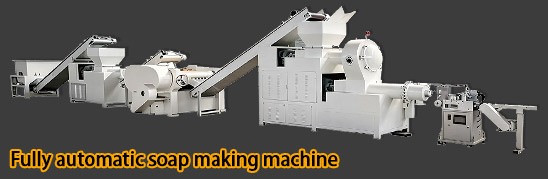
Tianjin Bright Machinery Equipment Co., Ltd. is a leading manufacturer specializing in automatic soap-making machinery and pharmaceutical packaging equipment. With nearly two decades of expertise, our high-performance solutions range from soap processing lines (toilet and laundry soap) to capsule fillers, tablet presses, blister packing, and cartoning machines, widely serving the personal care, food, and pharmaceutical industries.Certified with ISO9001 and CE standards, we ensure premium quality, innovative technology, and full compliance with strict global standards. Driven by our philosophy—"Not the best, but better"—we offer tailor-made automation solutions, complete technical support, and dedicated after-sales services to clients across more than 100 countries worldwide.
Contact Person:Jenna Liu
Tel/WhatsApp:8615522869921
E-mail:emily@tjbrightmachine.com
Add: Yinzuo Building, No. 35, Second Avenue, Tianjin TEDA